
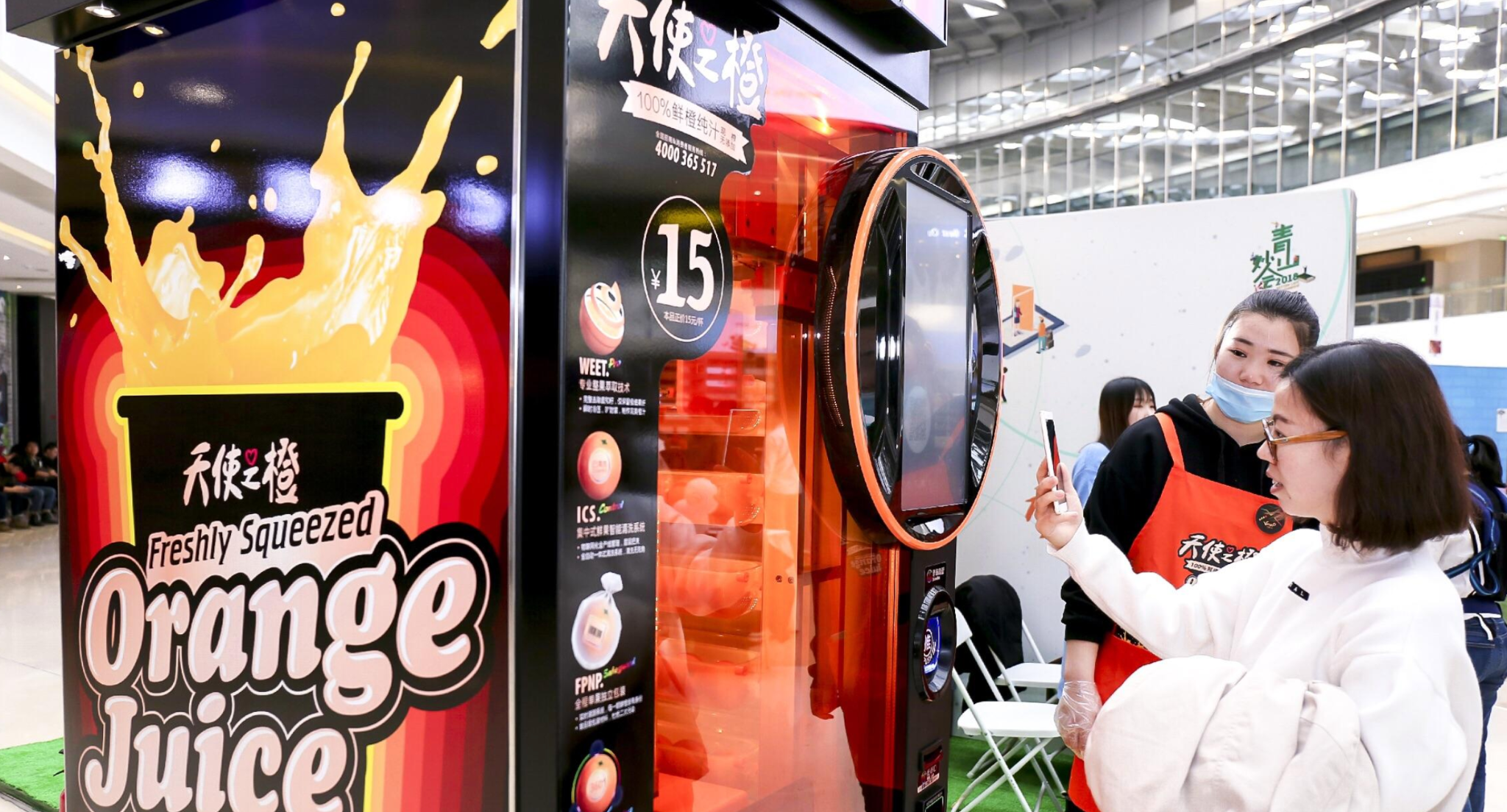
An orange juice vending machine can reduce much of the staffing and shop-space requirement of a traditional juice store, but that does not automatically make every machine profitable. The economics depend on a relatively simple relationship: how many cups the location can sell, how much gross profit remains from each cup, and whether that amount is enough to cover the costs of operating the machine. Singapore shows that the model can work at substantial scale. CNA reported that IJOOZ had around 1,500 machines across the country in 2025, operating in locations including MRT stations, offices, shopping centres, schools, residential areas and tourist attractions. But the same market also demonstrates why profitability cannot be judged from the machine alone. Location, selling price, fruit cost and operating efficiency all affect the result.
Profit Starts With the Location
A machine only earns money when customers use it. That makes sales volume one of the first questions when evaluating a potential location. A machine placed in a high-traffic transport hub may have very different economics from the same machine inside a quiet office building. Footfall alone is not enough. The operator also needs to consider whether people at that location are likely to buy fresh juice, when demand occurs, what price the market will accept and what the property owner charges for the space. CNA reported that most IJOOZ machines in Singapore sell juice at S$2, while some locations charge S$3 because of landlord requirements. Separately, an entrepreneur who previously operated a fresh orange juice vending machine told CNA that some shopping-centre rental offers were simply not viable for a vending-machine business. This is why two identical machines can produce very different business results.
Revenue Is Only One Side of the Calculation
Selling more cups increases revenue, but revenue is not profit. Each sale has costs behind it. Fresh oranges have to be purchased and delivered. Cups and other consumables are used with every transaction. Payment processing, electricity, cleaning, maintenance and location fees also have to be considered. Fresh juice adds another operational factor: fruit is perishable. Poor forecasting can create waste, while under-stocking can leave a good location unable to serve customers. IJOOZ says its Smart Juicer can serve approximately 180 cups before an orange refill and that its software supports sales forecasting, inventory tracking and refill-route planning. These are company-reported capabilities, but they demonstrate why operating efficiency becomes part of the profit equation rather than simply a technical feature of the machine. The useful question is therefore not simply:
“How much can one machine sell?”
It is:
“How much remains after the oranges, consumables, location and operating costs required to generate those sales?”
A Pilot Is the Best Way to Test the Economics
Before building a large network, a first machine can be used to establish the real economics of the market. The operator can measure actual cups sold per day, selling price, fruit consumption, replenishment frequency, payment costs, location expenses and maintenance requirements. That creates a much stronger basis for deciding whether to expand than relying on a generic ROI estimate. IJOOZ currently promotes its system as ROI-driven and publishes its own return claims. Those figures describe IJOOZ's model and should not be treated as a guaranteed result for another operator or market. Rent, fruit prices, selling price, customer demand and operating costs can all be different. For a new operator, the objective of the pilot is therefore not only to prove that customers will buy the juice. It is to determine whether the location produces enough contribution after its direct costs to justify the capital invested in the machine.
The TECHX32 View
We see fresh orange juice vending as a location-based retail business, not simply an equipment purchase. The machine can reduce the space and staffing structure required by a traditional juice shop. But the stronger opportunity comes when the operator combines the right equipment with a location that has sufficient demand and an operating model that keeps replenishment and other costs under control. This is also why we prefer evaluating a real market and location before making assumptions about profitability.
Considering an Orange Juice Vending Business?
If you already have a country, city or potential location in mind, TECHX32 can help you evaluate the machine requirements and the operating factors that should be considered before launching your first unit.