
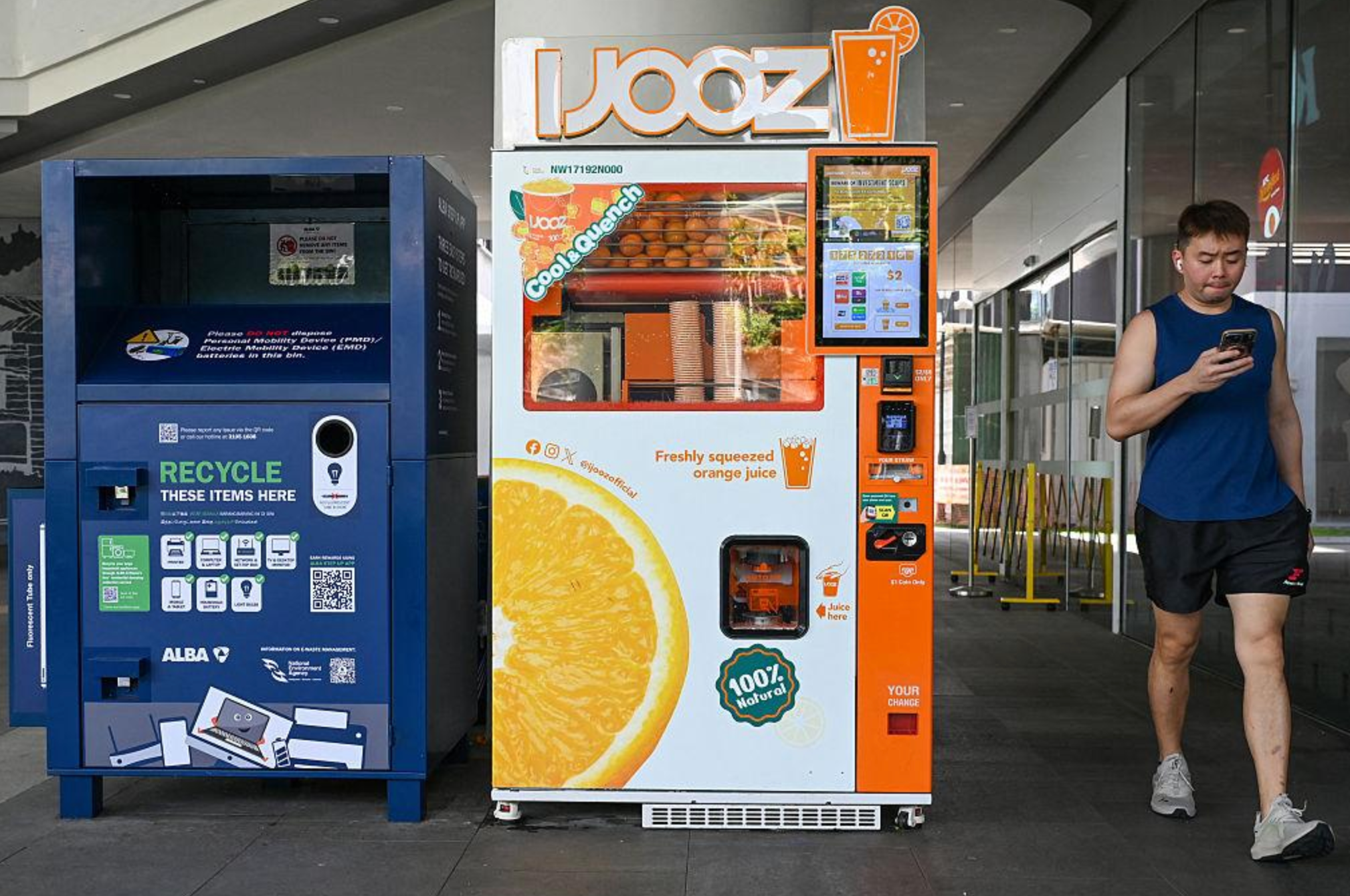
Starting an orange juice vending machine business can appear straightforward: buy a machine, secure a location, fill it with oranges and begin selling. In practice, the machine is only the visible part of the business. Behind it are decisions about location, fruit supply, storage, replenishment, cleaning, maintenance and how the machine will be monitored when nobody is standing beside it.
That does not mean the business needs to be complicated from day one. A new operator does not need the infrastructure of a large vending network before launching the first machine. The more useful objective is to build a small operating model that works in the real world and can be repeated if the first location performs well.
Established operators show that this model can scale. CNA reported that IJOOZ had around 1,500 machines in Singapore in 2025, across locations including MRT stations, offices, shopping centres, schools, residential areas and tourist attractions. The lesson for a new operator is not to copy that scale immediately, but to understand what has to work before scale becomes possible.
Begin With the Market and the Location
It is tempting to choose a machine first because it is the most tangible part of the project. A stronger starting point is the market. Who is expected to buy fresh orange juice, where do those customers already spend time, and under what commercial terms can a machine be placed there?
A busy location is not automatically a good location. An office building may have predictable weekday demand but limited weekend traffic. A tourist attraction may offer heavy footfall but different rent or revenue-sharing expectations. Hospitals, schools, transport hubs, shopping centres and residential developments each create a different pattern of customers and operating hours.
The commercial terms matter as much as the footfall. In Singapore, IJOOZ's founder told CNA that some machines sell juice at a higher price because of landlord requirements. That is a useful reminder that location economics can directly affect the business model.
Once a promising location has been identified, the machine can be evaluated against the needs of that site: available space and power, expected sales volume, payment methods, fruit capacity, refrigeration, cleaning requirements and remote-management capability. This reverses a common mistake. Instead of buying a machine and then searching for somewhere to put it, the operator is building the equipment decision around a real commercial opportunity.
Plan the Operation Behind Every Sale
Fresh orange juice vending is different from selling packaged drinks because the product begins with fresh fruit. Oranges have to arrive in the right condition, be stored correctly and reach the machine when they are needed. The machine then has to remain clean, refrigerated and operational.
At one machine, many of these tasks may be manageable with a simple routine. As more machines are added, the same tasks become a logistics system. Storage capacity increases, refill routes matter more, spare parts need to be available and operators need to know which machines require attention without visiting every location simply to check.
This is where machine technology becomes commercially important. IJOOZ says its Smart Juicer combines hardware and software and can serve approximately 180 cups before the oranges need to be refilled. Its cloud system includes sales forecasting, inventory tracking, refill-route planning and scheduling. These are IJOOZ's own reported specifications, but they illustrate the type of operational capability a buyer should examine when comparing equipment.
CNA's reporting on IJOOZ also shows how these systems are used in practice: data helps determine orange procurement, drivers receive instructions on how much fruit individual machines require, and refill routes can be planned more efficiently. The larger lesson is that the machine should not be evaluated only by how well it squeezes an orange. It should also fit the way the operator intends to supply, monitor and maintain the business.
A first-time operator does not necessarily need a warehouse, cold room or delivery fleet immediately. Those requirements depend on the market, climate, fruit supplier, number of machines and frequency of replenishment. They should nevertheless be considered early so that the operating model can grow without being rebuilt every time another machine is added.
Use the First Machine to Prove the Business
The first machine should answer questions, not merely generate sales.
A pilot gives the operator real evidence about how many cups are sold, when customers buy, how quickly oranges are consumed, how often replenishment and cleaning are required, and whether the location performs as expected. It also reveals practical issues that are difficult to see in a spreadsheet before launch.
This is why starting with a manageable pilot can be more useful than committing immediately to a large machine order. If the first location underperforms, the operator can investigate the location, pricing or operating setup before multiplying the problem across more machines. If it performs well, the same information becomes the basis for planning the next location.
The goal is therefore not simply to own an orange juice vending machine. It is to develop a repeatable retail operation in which the location, equipment and supply chain work together. Once that model has been tested with real customers, scaling becomes a decision based on evidence rather than assumption.
Ready to Start Your Orange Juice Vending Project?
TECHX32 works with buyers evaluating their own fresh orange juice vending operations. Tell us your country, city, planned location type, machine quantity and expected launch timing, and we can help you evaluate the machine requirements and prepare a quotation for your project.