
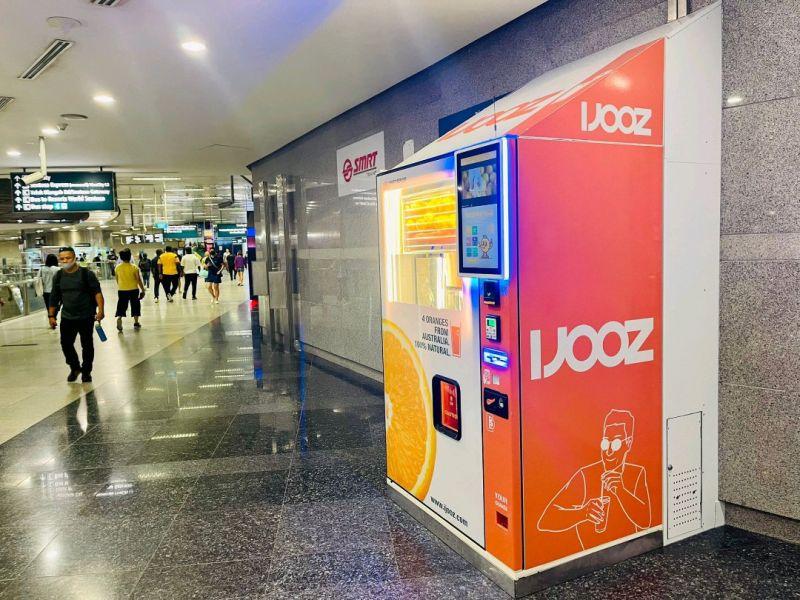
Fresh orange juice vending has moved well beyond being a novelty in Singapore. iJooz began operating in the market in 2016 and, by 2025, had built a network of around 1,500 machines across the island. CNA reports that the network sells tens of thousands of cups each day, with machines commonly found around transport and commercial locations.
The Singapore case demonstrates something important for entrepreneurs considering this business: fresh juice can be sold through an automated retail model at meaningful scale. But the machine itself is only one part of that model.
What Makes the Model Scalable?
Location comes first. Vending works best when machines are positioned where customers already pass through regularly. Singapore's dense network of transport hubs, commercial buildings and shopping areas creates many opportunities for this type of unattended retail.
Operations are equally important. Unlike packaged-drink vending, fresh orange juice requires regular fruit supply, storage, replenishment, cleaning and maintenance. As the number of machines increases, these tasks need to become increasingly efficient.
Technology helps make that possible. iJooz says its system uses sales data for forecasting, inventory tracking, refill planning and operational scheduling. The company reports that 10 operations staff can support more than 500 machines in Singapore. This is company-reported information, but it illustrates why remote management becomes increasingly important as a vending network grows.
For a new operator, the lesson is straightforward:
What This Means for New Operators
Singapore does not mean that every city—or every machine—will produce the same result. Rent, labour costs, customer behaviour, fruit supply and suitable locations vary considerably between markets.
What Singapore does provide is real-world evidence that the basic model can scale.
For someone entering a new market, we believe the better approach is therefore:
Choose the market → identify potential locations → establish the operating model → select the machine → launch a pilot → scale what works.
Starting with a pilot allows an operator to understand actual sales patterns, replenishment requirements and location performance before committing to a larger network.
THE TECHX32 VIEW
We see fresh orange juice vending as an opportunity to build a retail business without opening a traditional juice shop. The objective is not simply to replace staff with a machine—it is to create a business model that can be repeated across multiple locations while keeping the operating structure lean.
Singapore shows what this category can become when the right locations, machines and operating system work together. The next opportunity may be in markets where this type of network has not yet been widely established.
If you are already considering fresh orange juice vending in your city, timing matters. Talk to TECHX32 about your market, target locations and initial machine plan, and start evaluating the opportunity before the best locations and market openings are taken.